When Fossils Became Legends: The Birth of Mythical Creatures
Introduction
Long before paleontology became a scientific discipline, ancient peoples encountered large fossil bones eroding from hillsides, riverbanks, and deserts. Humans have collected fossils since prehistorical times. In December 2024 a group of Spanish scientists published a paper where they claimed Neanderthals collected small marine fossils. They might have been collected simply for aesthetic reasons because they found their shapes attractive for exchange, decorations or as toys. It is also not clear yet if they were collected by adults or children.Without anatomical knowledge or comparative biology, these remains were interpreted through the lens of local folklore, religious beliefs, and oral traditions. Many well‑known mythical creatures—dragons, griffins, cyclopes, sea monsters, giants—can be traced to such fossil discoveries.
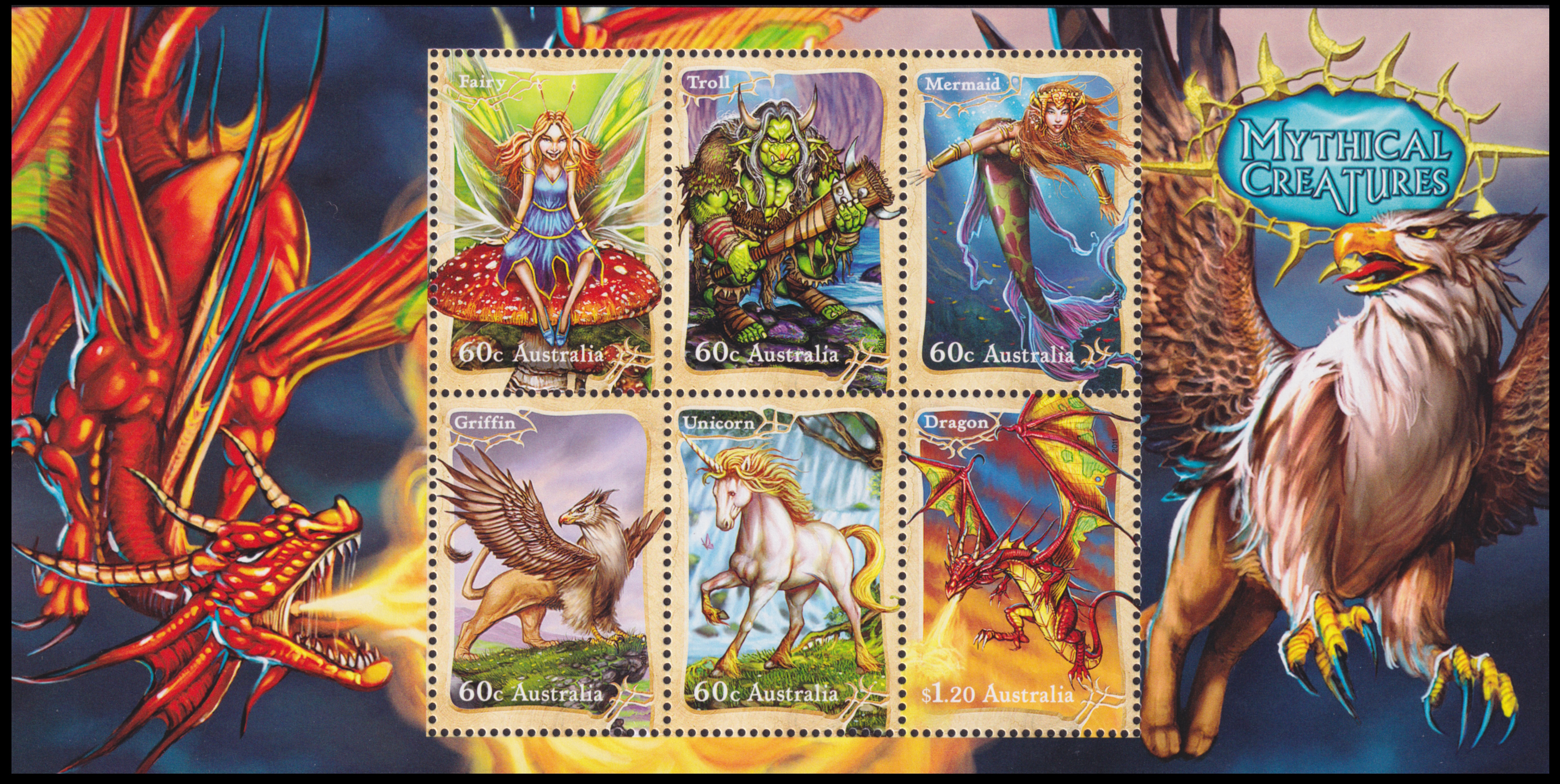
Mythical Creatures on stamps of Australia 2011
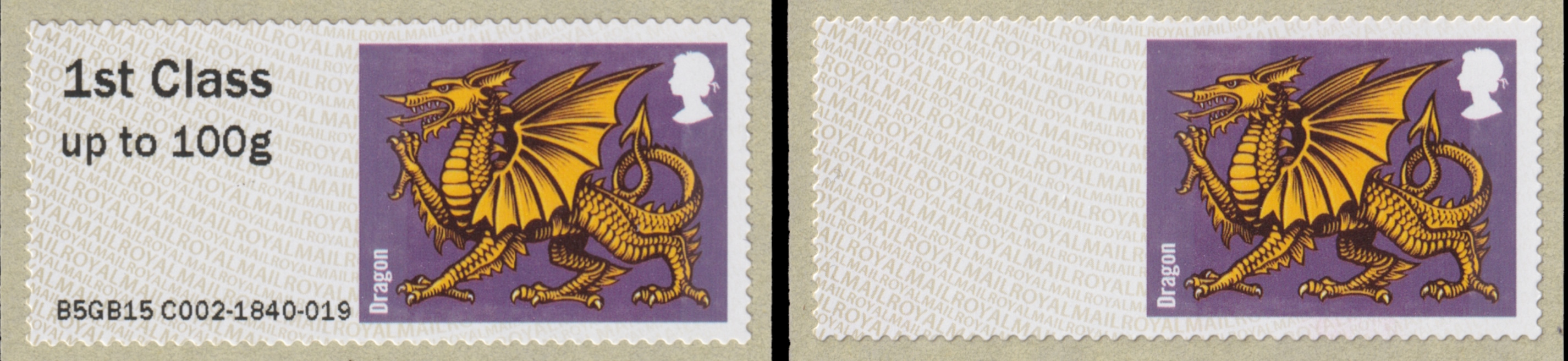
In many countries, including Great Britain, mythical creatures became symbols of power and were used as heraldic symbols.

This article explores the fascinating intersection between prehistoric fossils, myth‑making, and philately, showing how stamps from around the world document both the myths themselves and the scientific explanations behind them. For thematic collectors, this subject offers a rich narrative linking natural history, archaeology, anthropology, and cultural imagination.
Dragons
Asian Dragons
Chinese Dragons probably originated from discoveries of dinosaur and pterosaur fossils. Ancient Chinese referred to unearthed fossil bones as "dragon bones" and documented them as such. For example, Chang Qu in 300 BC documents the discovery of "dragon bones" in Sichuan. This province is known today for abundant fossil discoveries of dinosaurs: sauropods, theropods and early ornithopods and even one of the earliest known stegosaurs, as well as many dinosaur footprints, trackways and eggs.In the past, and in the same villages today, they were often ground into medicinal powders.
 |
 |


|
|
|
Above:
A dragon on stamps of Republic of China (Taiwan) and Australia
MiNr.: , Scott: respectively. Right: A dragon on Souvenir-Sheet of Azerbaijan 2024 MiNr.: , Scott: . |
European Dragons
 |
 |
| Fountain of Klagenfurt on stamp of Austria 1968 MiNr.: 1256, Scott: 696. | Woolly Rhino on stamp of Switzerland 2024 MiNr.: 2968, Scott: . |
Around the year 1335 a skull of a mysterious animal was discovered near the small Austrian town Klagenfurt. It looked different from anything known to inhabitants of the town. Because it looked different from anything known to inhabitants of the town, they interpreted it as belonging to a dragon. They called this dragon the “Lindwurm” in German. Stories about the Lindwurm state that it lived at the lake before the town was founded and ate virgins. In 1590, Ulrich Vogelsang erected a fountain shaped in the form of this monster. Only in 1840, paleontologist Franz UNGER determined the skull belonged to a woolly rhino (Coelodonta antiquitatis), rather than a mystical dragon, who inhabited the area during the Ice Age. The sculpture is historically significant, because it is an early attempt at reconstructing the appearance of an extinct animal. The skull has survived till today and can be seen in the local lore museum.
 |
 |
|
|
Dragons on stamps of Germany
MiNr.: , Scott: respectively. |
||
 |
 |
 |
|
|
Dragons on stamps of Belgium and Great Britain
MiNr.: , Scott: respectively. |
|||
Griffins
Griffins were mythical creatures with the head and wings of an eagle and the body of a lion. |
| Griffin on stamp of Australia 2011 MiNr.: , Scott: |
 |
 |
 |
| Griffin on stamps of Great Britain 2015 and Belgium 2012, MiNr.: , 4253; Scott: , 2546 respectively. Protoceratops on stamp of Mongolia 1967, MiNr.: 462, Scott: 449. | ||
Cyclops
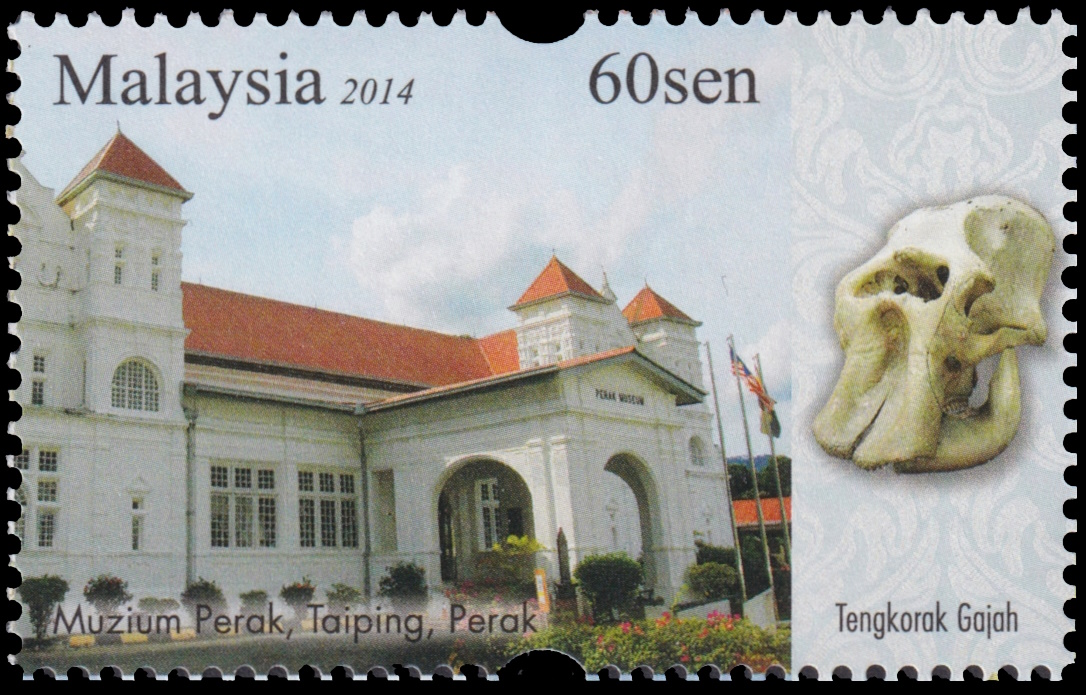
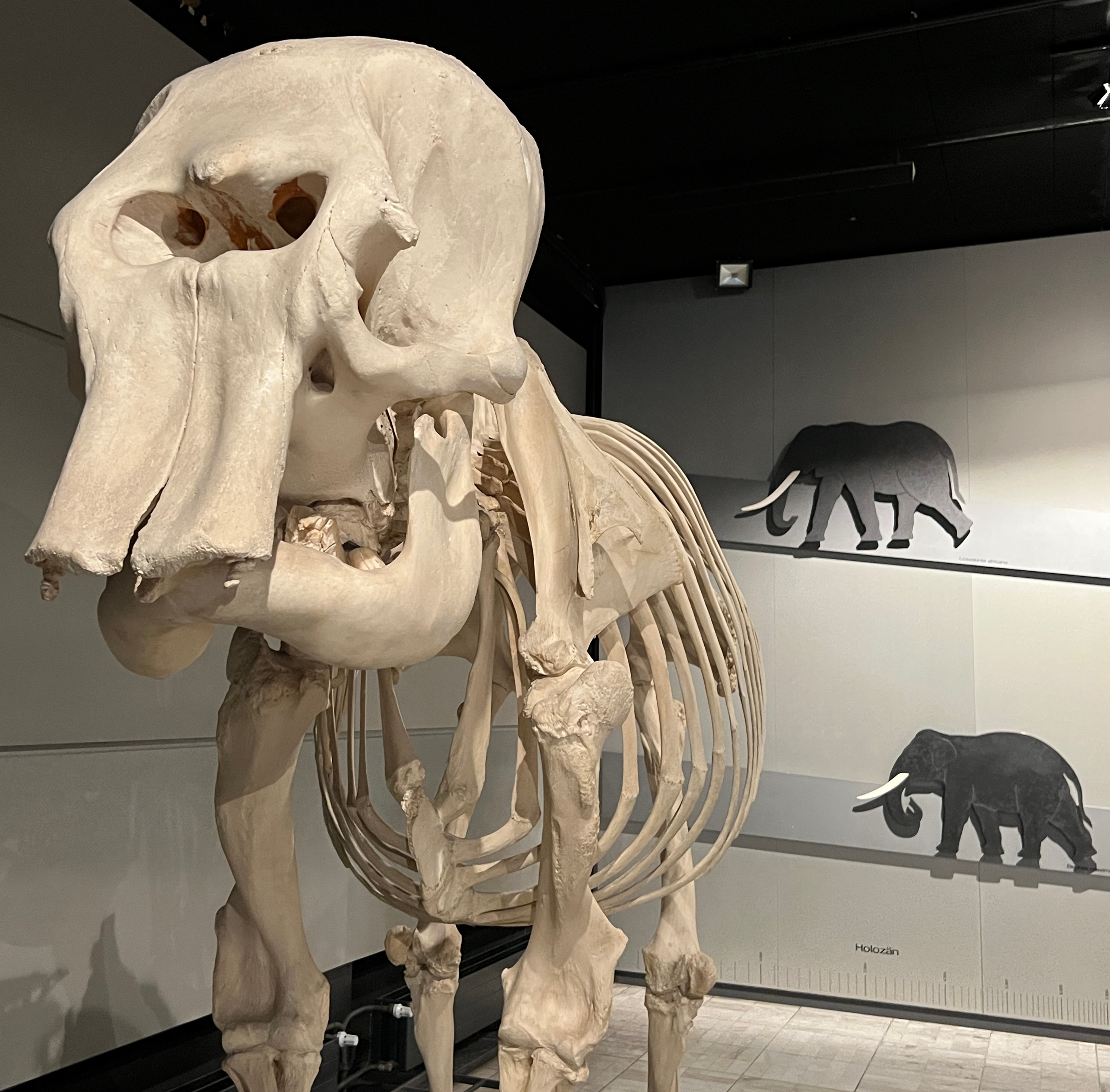
On the other side of the world, discoveries of fossil skulls of dwarf elephants on the Mediterranean islands of Cyprus, Malta, and Sicily likely contributed to the myth of the Cyclops - a race of giant beings with a single eye in the middle of their forehead. These extinct elephants had a large central nasal opening in the skull for the trunk, which, to ancient observers unfamiliar with elephant anatomy, could easily be mistaken for a single enormous eye socket. Greek settlers encountering such skulls may have interpreted them as the remains of one-eyed giants described in Homer’s Odyssey. In this way, fossil evidence may have directly influenced classical mythology. |
 |
 |
 |
| Fossilized skeleton of dwarf elephant on definitive stamp of Malta 2009, MiNr.: 1612, Scott: 1383. | Elephant skull on stamp of Malaysia 2014, MiNr.: 2110, Scott: 1495a. | Elephant skull. | Tepegoez, a kind of cyclops in Turkic mythology, on stamp of Azerbaijan 2022, MiNr.: 1651D, Scott: . |


Giants
 |
| A giant on stamp of UK 2009, MiNr.: 2778, Scott: 2675. |
 |
| St. Stephen’s Cathedral in Vienna on stamp of Austria 1977, MiNr.: 1544,1545, Scott: 1055, 1056. |
 |
| Woolly Mammoths on stamp of Switzerland 2024, MiNr.: 2970, Scott: 1989. |
 |
| Chapel Bridge in Lucerne on stamp of Switzerland 2018, MiNr.: 2542, Scott: 1682. |
Workers uncovered a massive bone, later identified as the femur of a woolly mammoth, but at the time, its true origin was unknown. In keeping with medieval beliefs, the bone was thought to be the relic of a Biblical giant, perhaps linked to the legends of the Flood or mythic figures such as Gog and Magog. The bone was prominently displayed on the cathedral’s north gate, which came to be known as the Giant’s Gate (Riesentor).
In medieval Europe, it was common practice to display the bones of Biblical giants in churches, cathedrals, and town halls. Many churches across Europe exhibited large bones, now known to belong to woolly mammoths, woolly rhinoceroses, or other Ice Age megafauna.
For centuries, the bone remained a curiosity, reinforcing local myths about ancient giants who once roamed the land. It was not until 1613 that the bone’s true identity was recognized.Mammoth or elephant femur (hind leg bone) could easily be mistaken for those of a human giant, as it has a very similar shape, but much bigger, especially by someone without advanced anatomical knowledge.
The French medical student Jean Riolan the Younger correctly identified it as belonging to an extinct elephant, what we now know to be a woolly mammoth (Mammuthus primigenius).Today, this historic bone is preserved in the Geological Collection of the University of Vienna, where it serves as a reminder of how science gradually replaced myth in our understanding of Earth’s ancient past.
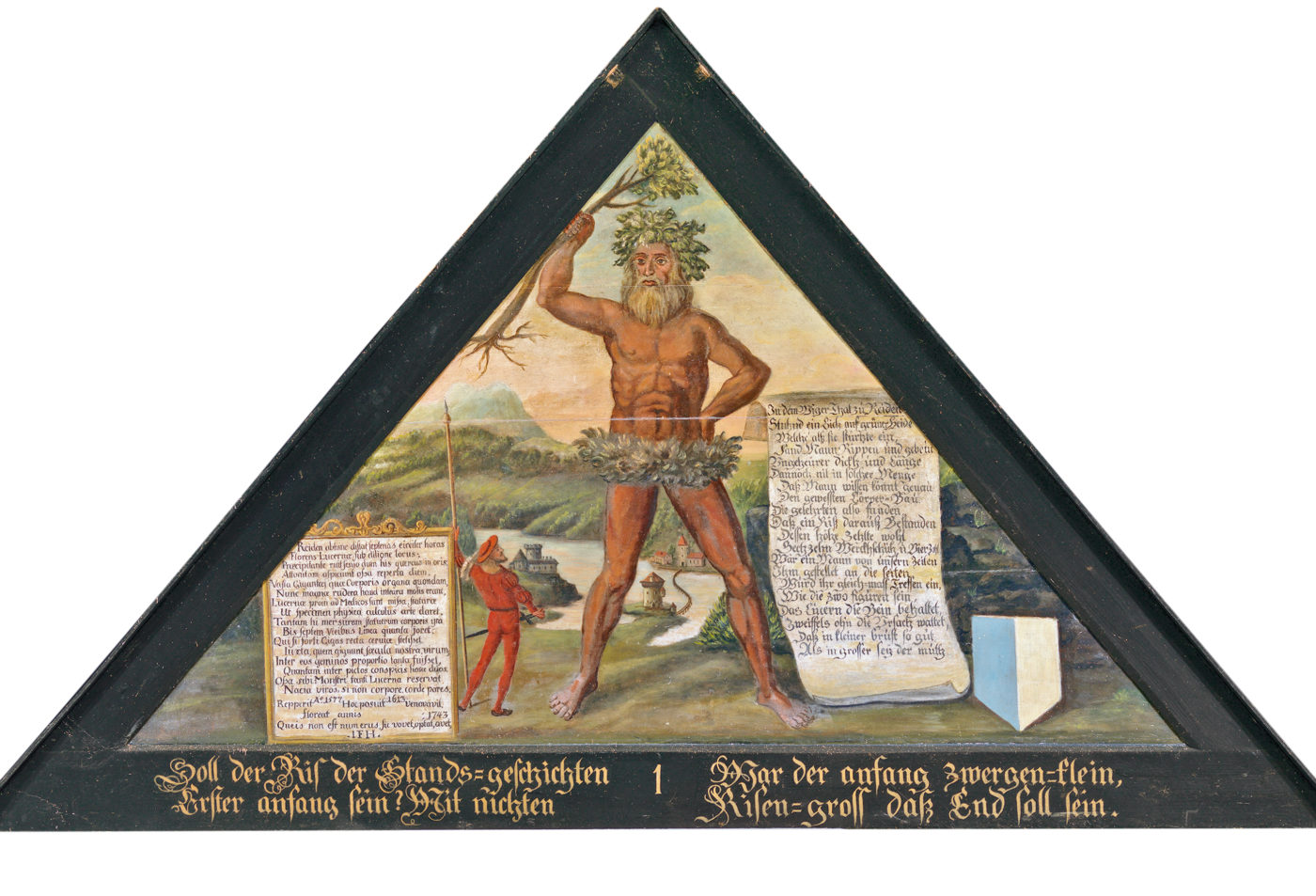
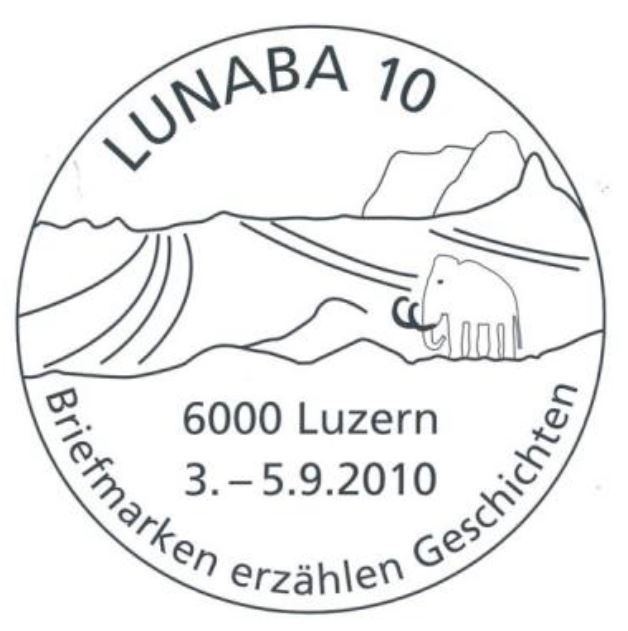
Other examples are mammoth bones discovered in Switzerland in 1577 near the monastery of Reiden, later known in the literature as the "Giant of Reiden", the "Giant of Lucerne", or the "Swiss Giant". In "Geschichte der Mammutfunde", Professor Arnold Lang (1855–1914), a Swiss naturalist and comparative anatomist, described the story of this discovery:
In 1577, huge bones were found in Heiden in the canton of Lucerne under an oak tree that had been uprooted by a storm.
They were brought to Lucerne.
When the famous doctor Felix Plater was called to Lucerne in 1584 to care for the sick military colonel Ludwig Pfyffer,
the councilors showed him these bones - as Plater himself tells us in his Observationes medicae.
He examined them and could not believe that they were anything other than the bones of a giant.
The council decided to send him some of the larger pieces to Basel, where Plater compared them with the human skeleton pieces
in his possession and was confirmed in his belief that they were the bones of a human giant, with height of 5.5 meters.
Plater then had the Basel master painter Hans Bock make a drawing of the bones that had been reconstructed and supplemented
to form a gigantic human skeleton and sent the drawing back to Lucerne along with the bones.
In 1799, the renowned naturalist Johann Friedrich Blumenbach (1752–1840) from Goettingen (now part of Germany) correctly identified these fossils as the bones of a mammoth. He took two of the bones with him for further study. Today, casts of these bones can be seen at the Natural History Museum in Lucerne. The earlier misidentification by Plater was due to the similarities between the foot bones of large mammals such as the elephant, which was unknown in 16th century Switzerland and those of humans. The absence of a skull or tusks at the discovery site further contributed to the confusion.
 |
 |
 |
|
The Giant of Lucerne on one of the panels of the Chapel Bridge in Luzern.
Image credit: kapellbruecke.com".
|
The Lucerne Chapel Bridge on stamp of Switzerland 1993, MiNr: 1511, Scott: B590. |
The Mammoth from Lucerne on postmark of Switzerland 2010.
|
Unicorns
The unicorn was a legendary one-horned animal whose image and attributes developed from ancient accounts of real animals, medieval folklore, and later interpretations of unusual natural objects. Ancient writers, including Ctesias (c. 400 BCE), described a one-horned animal associated with India, probably drawing in part on the Indian Rhinoceros (Rhinoceros unicornis). In medieval Europe, the creature gradually acquired its familiar horse-like appearance, while long, spirally twisted Narwhal tusks (Monodon monoceros) came to be regarded as its genuine horns, or alicorns. |
| Unicorn on stamp of Australia 2011, MiNr: 3624I, Scott: 3579. |
 |
| Unicorn on stamp of Great Britain 2009, MiNr: 2777, Scott: 2674. |
 |
| Unicorn on stamp of Belgium 2011, MiNr: , Scott: . |
 |
| Unicorn on stamp of France 1964, MiNr: 1425, Scott: 1107. |
 |
| Unicorn of Scotland and horse of Hannover on stamp of Great Britain 1998, MiNr: 1738, Scott: . |
 |
 |
| Indian Rhinoceros on stamp of India 1962, MiNr: 346, Scott: 362. | Narwhal on stamp of Greenland 1975, MiNr: 92, Scott: 72. |
Because the horn was believed to be made of a substance called alicorn, it was attributed with magical and medicinal properties. It was believed to protect against poisoning, either by detecting or neutralizing toxins, and to cure a wide range of diseases.
Cups reputedly made of unicorn horn—but actually made of rhinoceros horn or narwhal tusk—were highly valued by important persons in the Middle Ages as protection against poisoned drinks.
Alicorn powder, made from narwhal tusks or the horns of various animals, was sold in Europe for medicinal purposes as late as 1741.
The long, spirally grooved narwhal tusk closely resembled the traditional image of the unicorn's horn and was sometimes known as the “sea unicorn”.
Narwhal tusks were consequently incorporated into royal and ecclesiastical treasures, ceremonial objects, and cabinets of curiosities (Kunstkammern) throughout Europe. In some cases, they were treated as objects of exceptional prestige. The Habsburg collections, for example, included a large narwhal tusk known as the Ainkhürn, which was believed to be the horn of a unicorn and was regarded as an inalienable heirloom of the House of Austria.
In medieval folklore and bestiary tradition, the unicorn was commonly described as a fierce and untameable creature that could not be captured by hunters through force alone.
The medieval bestiary tradition consisted of illustrated “books of beasts” that described both real and mythical animals, often combining their supposed characteristics with moral and Christian interpretations. It emerged from the Late Antique Physiologus, a text compiled by an unknown author before the middle of the 2nd century AD. It consists of stories based on the “facts” of natural science as understood by someone called Physiologus (Latin: “Naturalist”), about whom nothing further is known, combined with the compiler's own religious ideas. Bestiaries became particularly popular in Western Europe from about the 12th century onward. They were not scientific works in the modern sense, but used animals to convey religious and moral lessons.
According to bestiary accounts, the unicorn could be subdued only by a pure virgin. When it encountered her, it would approach willingly and place its head in her lap, thereby becoming vulnerable to the hunters waiting nearby.The story acquired a range of secular and courtly meanings. The unicorn's wildness and resistance to capture could be associated with purity and chastity, while the encounter between the untamed beast and the maiden also became a metaphor for courtly love and the relationship between a lover and his beloved.
At the same time, the virgin-and-unicorn story became an important Christian allegory. In the Physiologus and the medieval bestiary tradition, the unicorn was interpreted as a symbol of Christ, while the virgin represented the Virgin Mary. The animal's approach to the virgin and its vulnerability after resting in her lap were understood as an allegory of the Incarnation: Christ, taking human form through Mary, became subject to human suffering and death. The subsequent capture and killing of the unicorn could therefore be interpreted in relation to the Passion of Christ.
The combination of religious allegory, courtly symbolism, and folklore made the unicorn a versatile figure in medieval European art and literature. Its representation could convey different meanings depending on the context, ranging from chastity and courtly love to the Incarnation and Passion of Christ.
The unicorn also became an established figure in European heraldry. In heraldry, it is often depicted as a horse with a goat's cloven hooves and beard, a lion's tail, and a slender, spiral horn on its forehead. It was used in the arms of noble families and institutions and, most prominently, as a royal supporter in Scotland.

The unicorn also entered municipal heraldry, where it became an enduring symbol of several European towns. One of the earliest documented examples is Schwäbisch Gmünd, whose unicorn is regarded by the city as probably the oldest surviving municipal unicorn in the German-speaking world.
 |
|
Unicorn on a postmark of West Germany, 1965 — the coat of arms of Schwäbisch Gmünd. Schwäbisch Gmünd is known as the Gold- and Silberstadt (Gold and Silver City), reflecting its long tradition of goldsmithing, silversmithing, and jewelry production. |
During the 13th century, Schwäbisch Gmünd was closely associated with the cult of the Virgin Mary. The city's principal parish church was dedicated to Mary, and the later Heilig-Kreuz-Münster developed from this medieval ecclesiastical setting.
The precise reason why the unicorn was chosen for the city's seal is not documented. Recent research by the Stadtarchiv Schwäbisch Gmünd, however, connects the choice with the medieval allegory of the unicorn and the virgin. In this interpretation, the unicorn can be understood as a symbol associated with the city's patroness, the Virgin Mary. The Gmünd example therefore provides an early instance of how the religious symbolism of the medieval unicorn tradition could become incorporated into a municipal emblem.
Conclusion
From the deserts of Mongolia to the mountains of Austria, fossils have always whispered stories to anyone curious enough to listen. Long before paleontology gave us the tools to decode these ancient clues, people filled the gaps with imagination — and what spectacular worlds they created. Dragons soared from dinosaur bones, griffins prowled out of beaked skeletons, and mammoth femurs became the limbs of towering giants who supposedly stalked medieval Europe. Each discovery sparked a tale, each strange bone a doorway into myth. Today, science lets us see these remains for what they truly are, yet the legends they inspired remain just as captivating. In a way, fossils gave us two histories: one written in stone, and one written in story — and together they remind us how deeply humans have always longed to understand the ancient world beneath our feet.References
- Ancient Greeks: "The Archaeologist",